ALLHUMANBODY / VISUAL LEARNING
Small questions.
A closer look inside.
Explore illustrated answers to everyday questions, then follow the anatomy into a deeper lesson. Each poster has a readable explanation, sources and a related learning path.
AI-assisted educational illustrations. Simplified anatomy, not personal medical advice or clinician-certified images.
Explore the poster library
383 posters · Page 1 of 16
 Respiratory
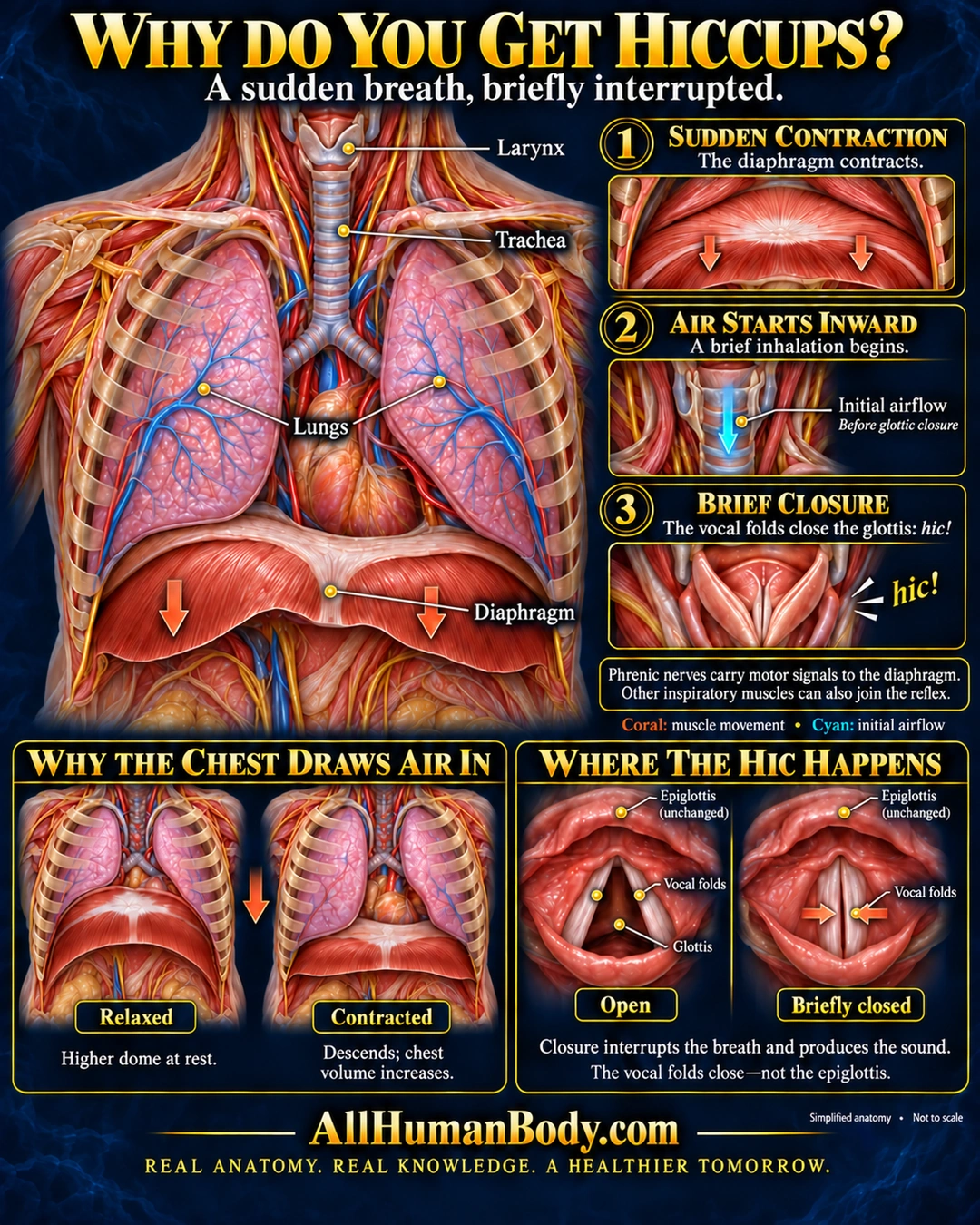
Why Do You Get Hiccups?
A hiccup begins with an involuntary inspiratory contraction. The vocal folds then briefly close the glottis, interrupting the breath and producing the familiar sound.
Explore the explanation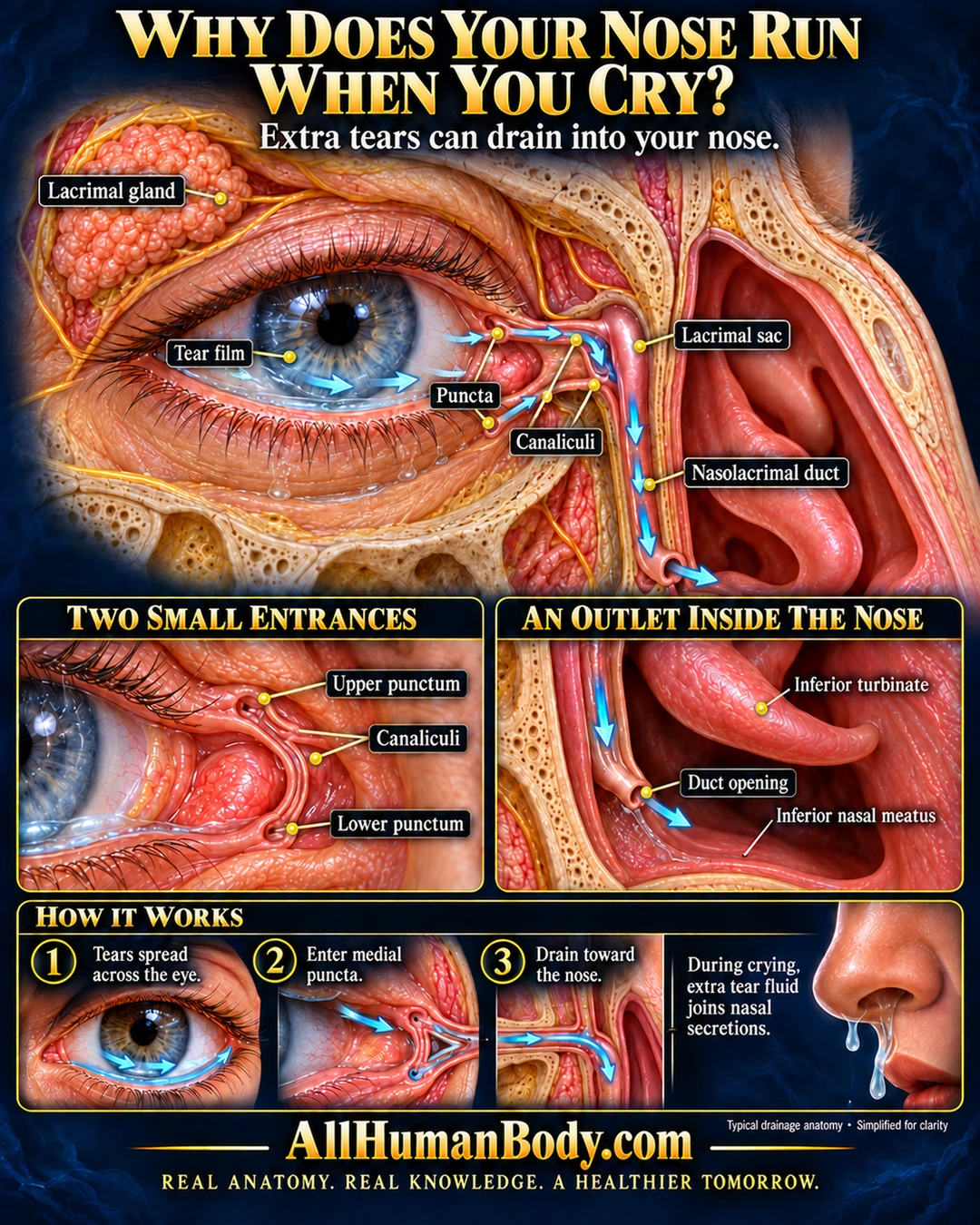 Special Senses
Why Does Your Nose Run When You Cry?
Tears spread over the eye and drain through small openings near the inner eyelids. Extra tear fluid during crying can follow this route into the nose and contribute to a runny nose.
Explore the explanation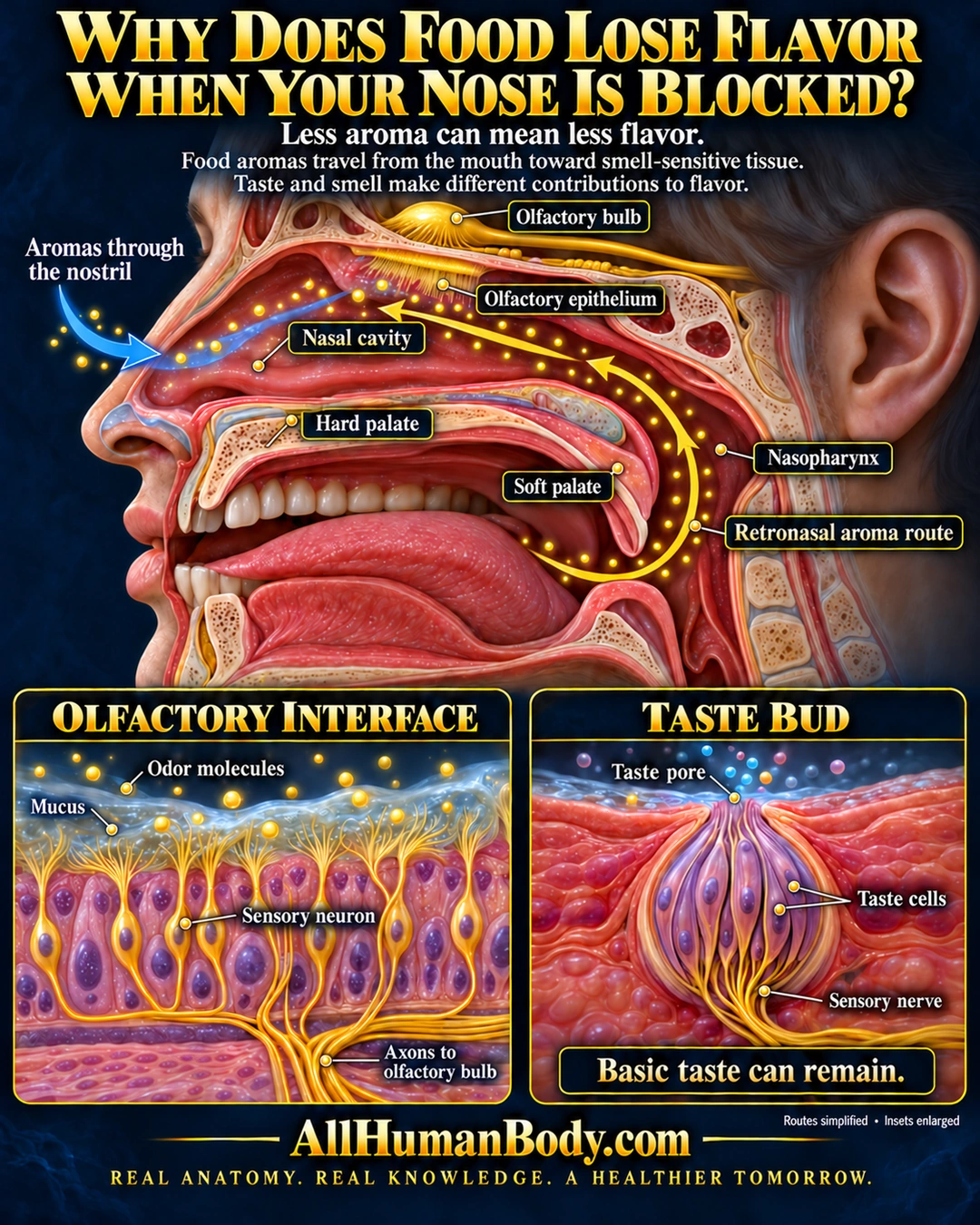 Special Senses
Why Does Food Lose Flavor When Your Nose Is Blocked?
Food aromas can reach smell-sensitive tissue through the mouth and upper throat. A blocked nose can reduce this contribution to flavor even when basic taste remains.
Explore the explanation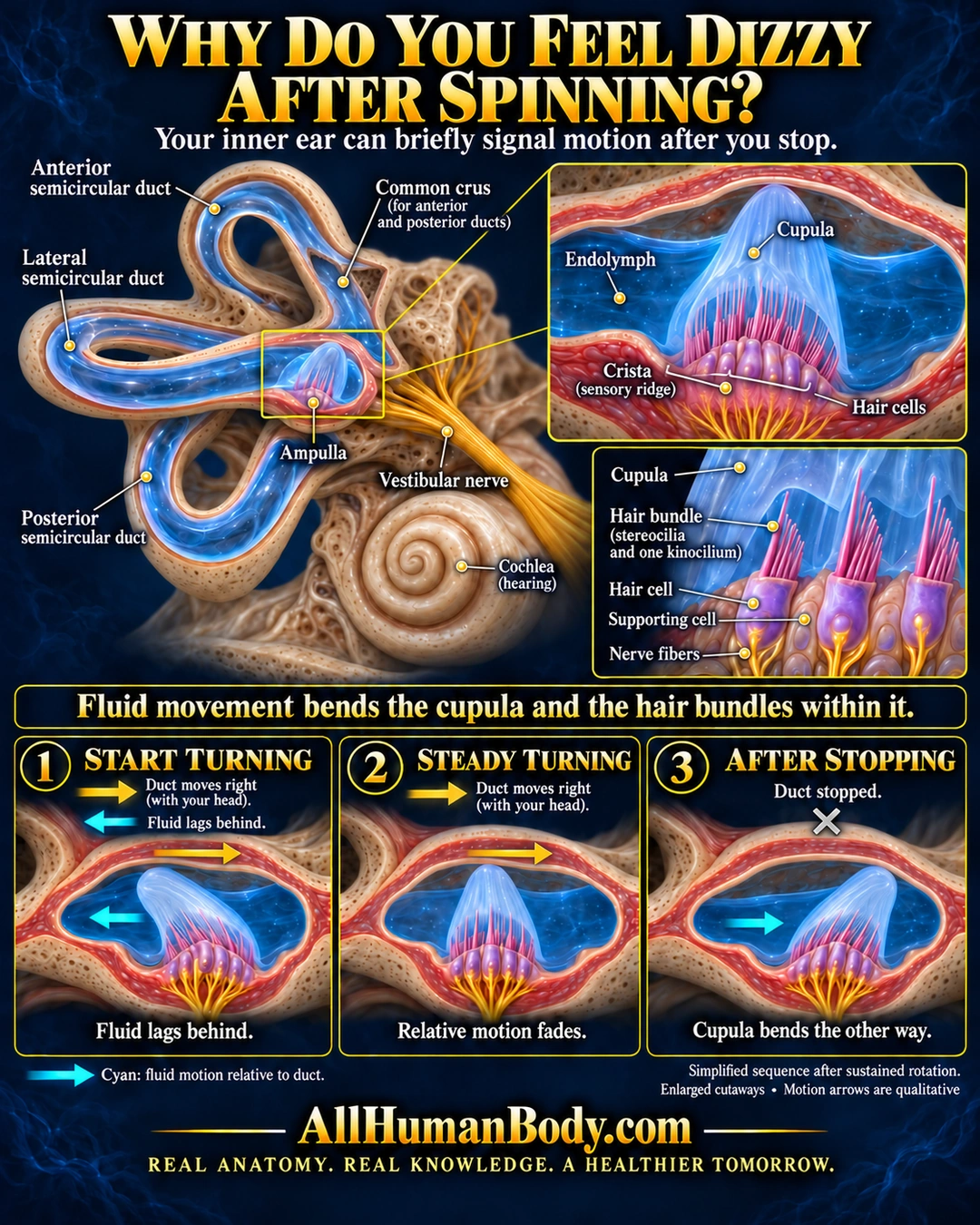 Special Senses
Why Do You Feel Dizzy After Spinning?
Changing rotation shifts fluid relative to the semicircular ducts and bends sensory hair bundles. After sustained turning stops, a temporary opposite response can contribute to feeling motion while still.
Explore the explanation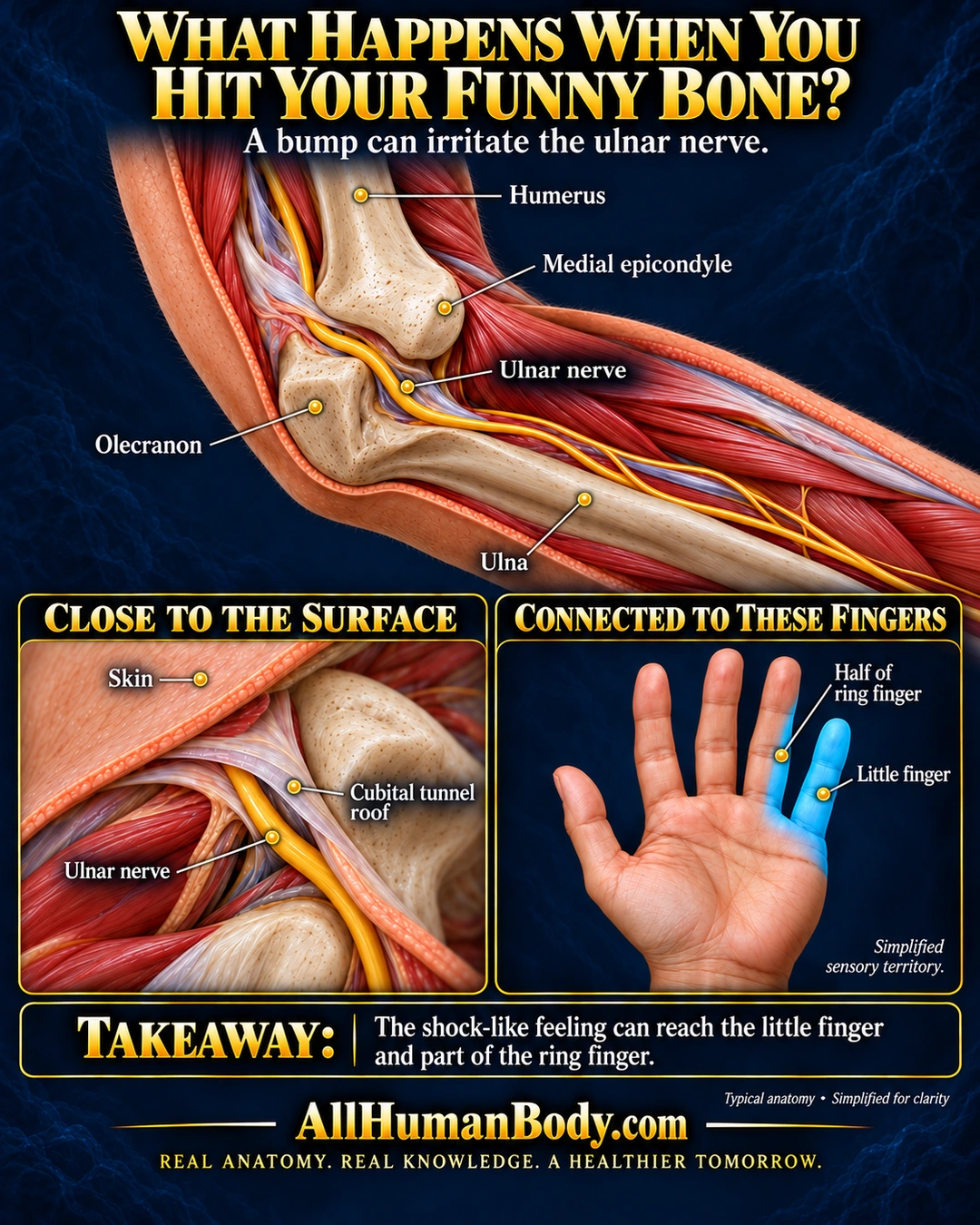 Nervous
What Happens When You Hit Your Funny Bone?
The ulnar nerve passes close to the surface behind the inner elbow. A bump can irritate it and cause a shock-like feeling toward the little finger and part of the ring finger.
Explore the explanation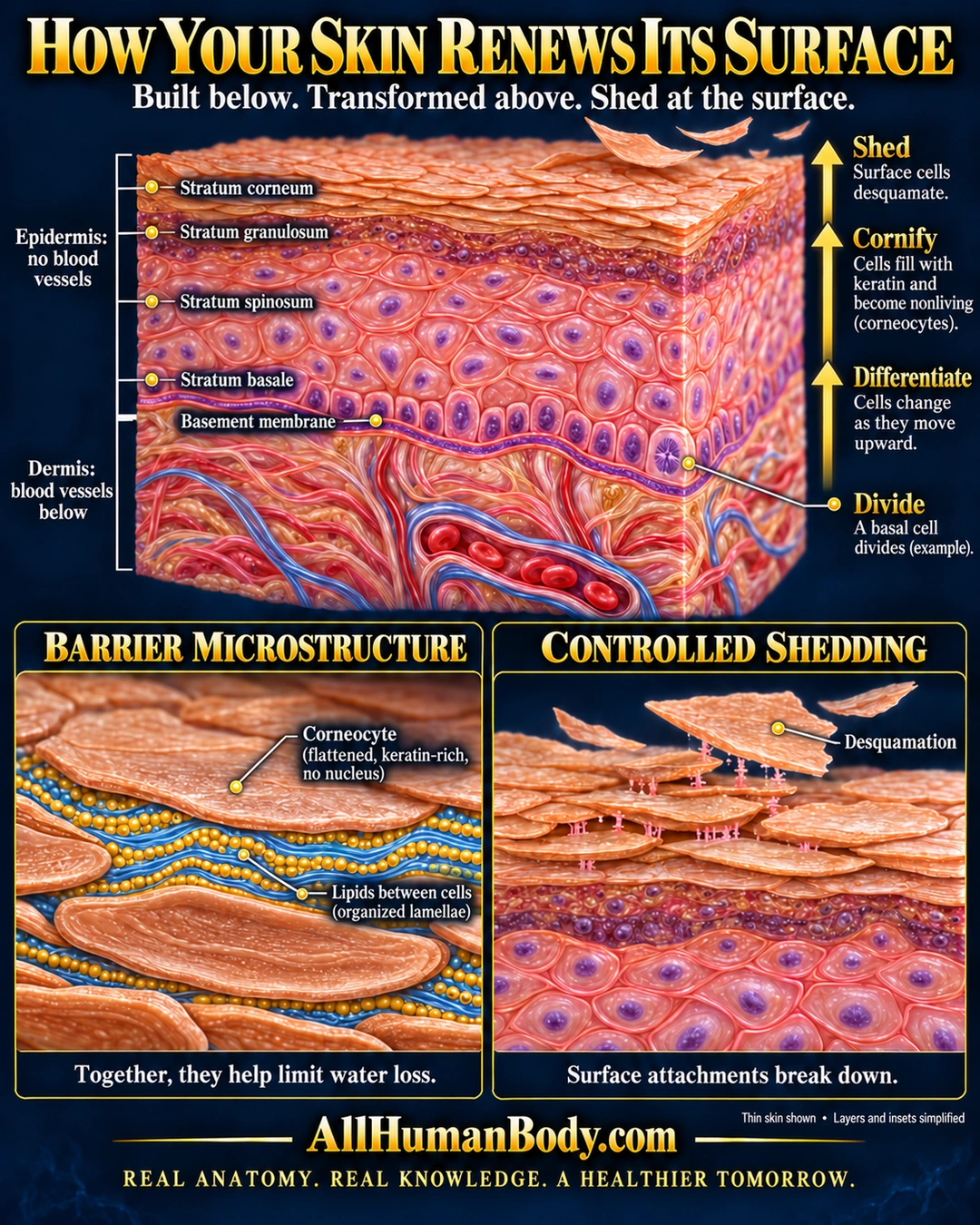 Integumentary
How Your Skin Renews Its Surface
New epidermal cells are produced below the surface and change as they move outward. Flattened corneocytes and surrounding lipids contribute to the barrier while surface cells are gradually shed.
Explore the explanation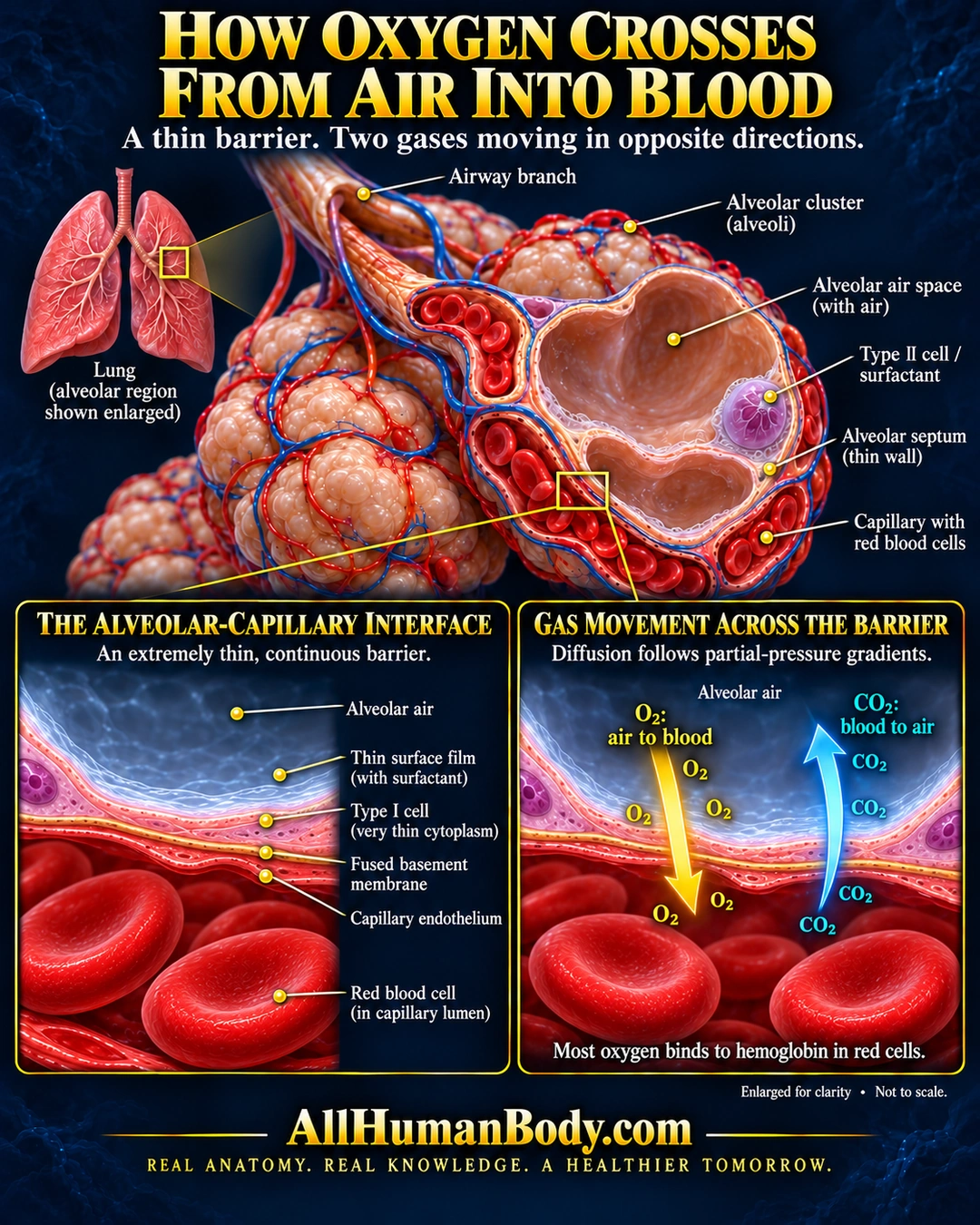 Respiratory
How Oxygen Crosses From Air Into Blood
Alveolar air and blood remain separated by a thin tissue barrier. Oxygen and carbon dioxide diffuse across it in opposite directions according to their own partial-pressure gradients; most blood oxygen is carried on hemoglobin.
Explore the explanation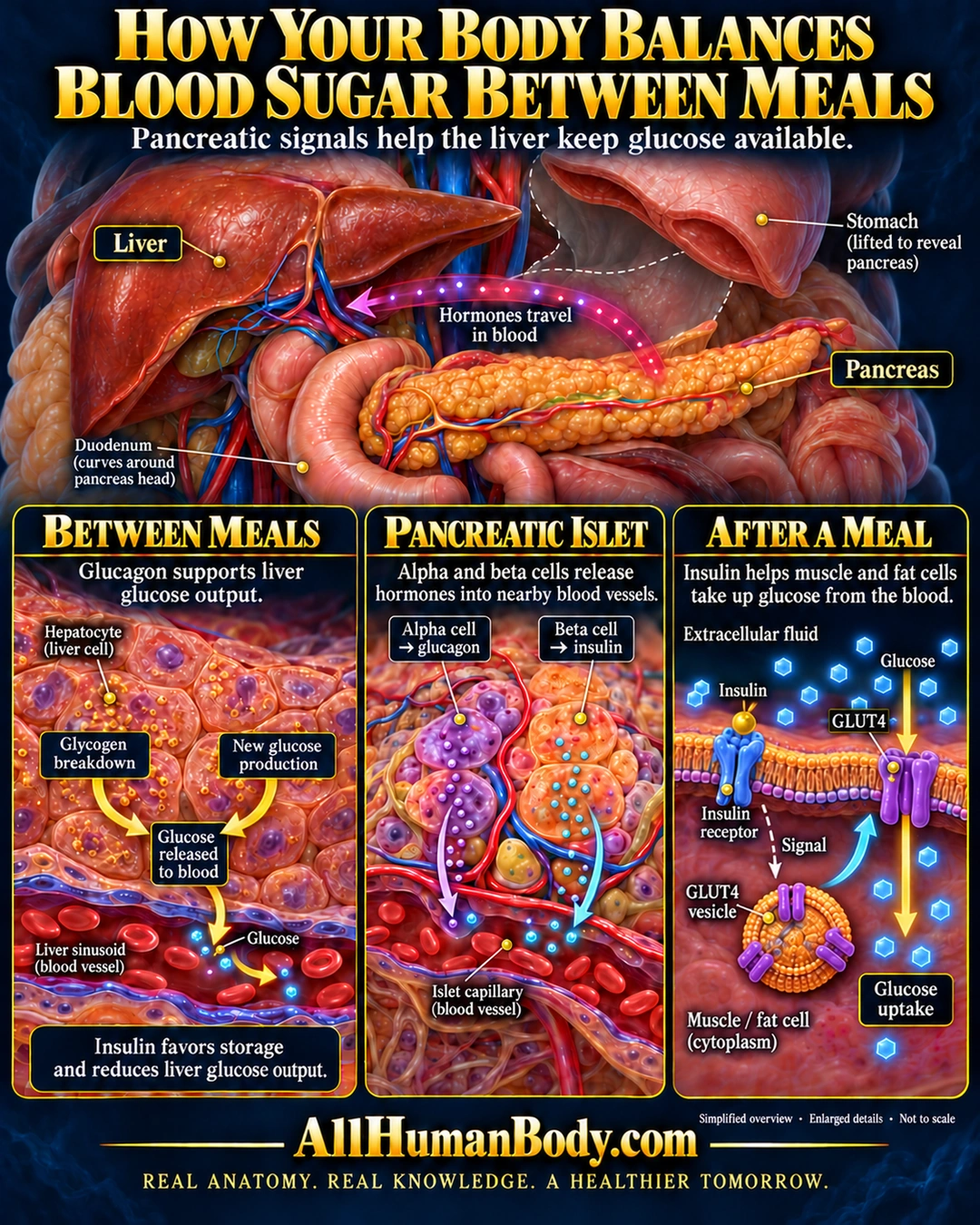 Endocrine
How Your Body Balances Blood Sugar Between Meals
Pancreatic hormones help coordinate glucose supply and storage. Glucagon supports liver glucose output between meals, while insulin favors storage and helps muscle and fat cells take up glucose.
Explore the explanation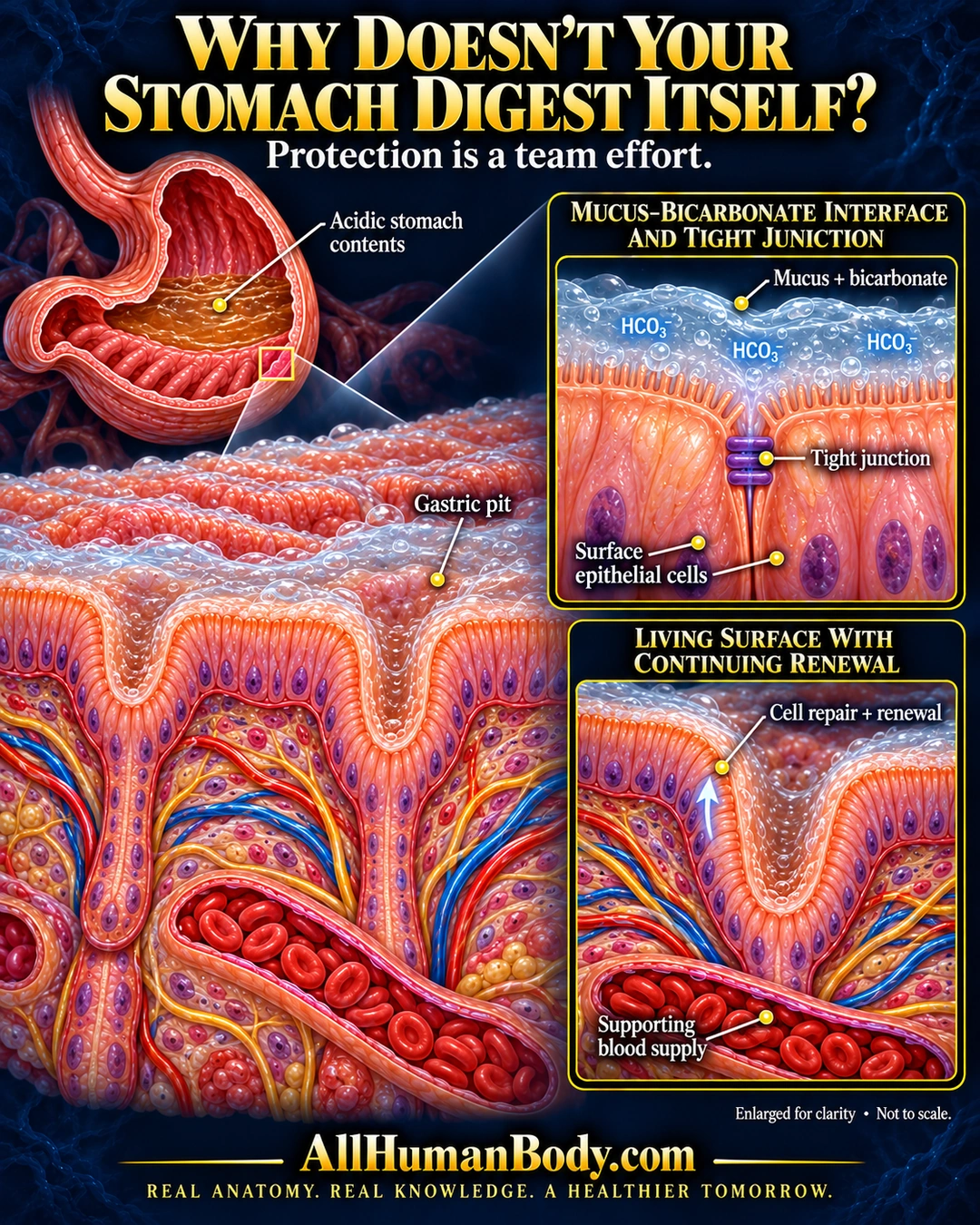 Digestive
Why Doesn’t Your Stomach Digest Itself?
The stomach lining is protected by several cooperating mechanisms: mucus and bicarbonate, connected epithelial cells, ongoing repair and renewal, and supporting blood flow. Protection is maintained rather than provided by an invulnerable coating.
Explore the explanation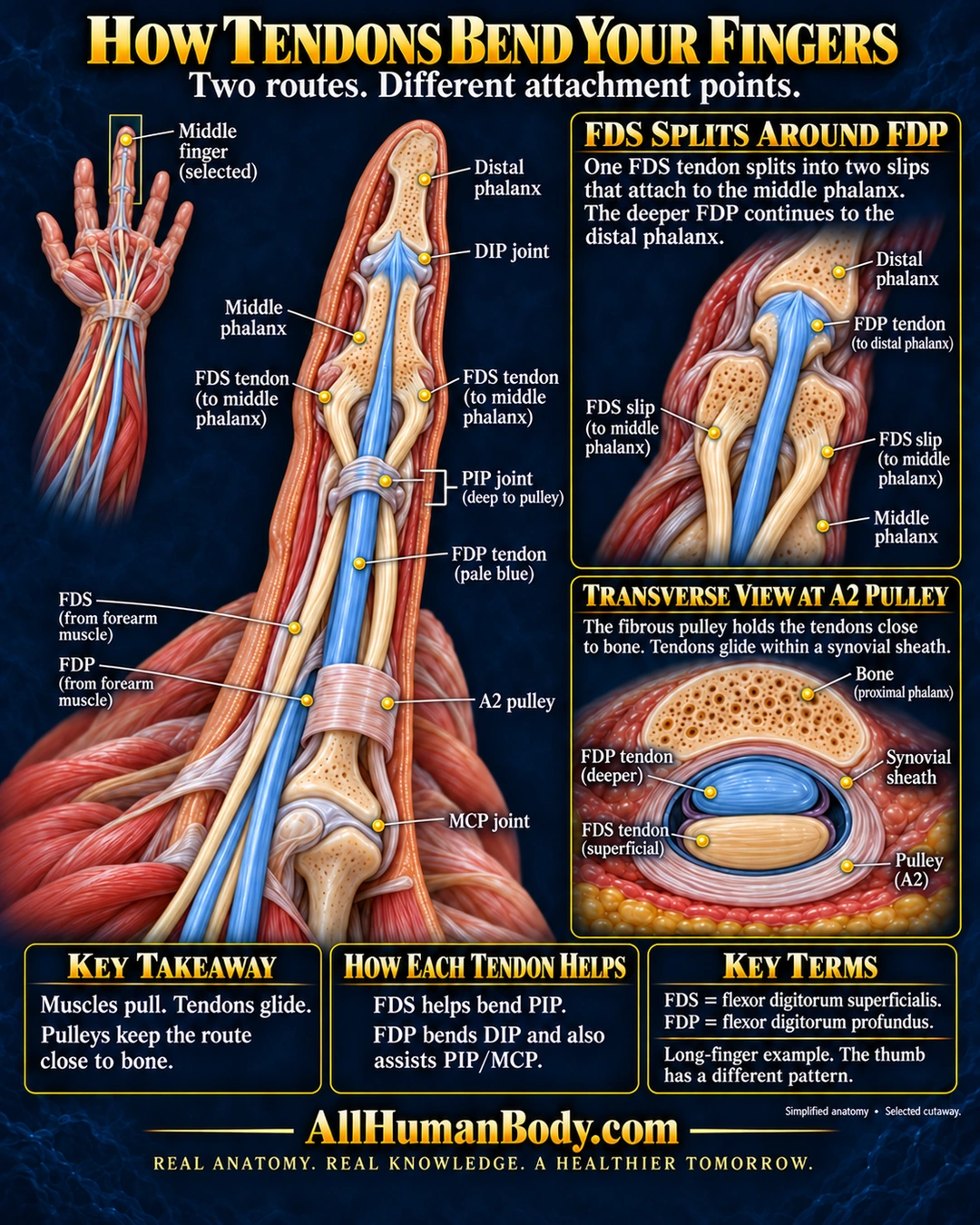 Musculoskeletal
How Tendons Bend Your Fingers
In the four longer fingers, the superficial flexor tendon divides around the deeper tendon. Their different attachment points help explain how they bend different joints while pulleys keep the gliding tendons close to bone.
Explore the explanation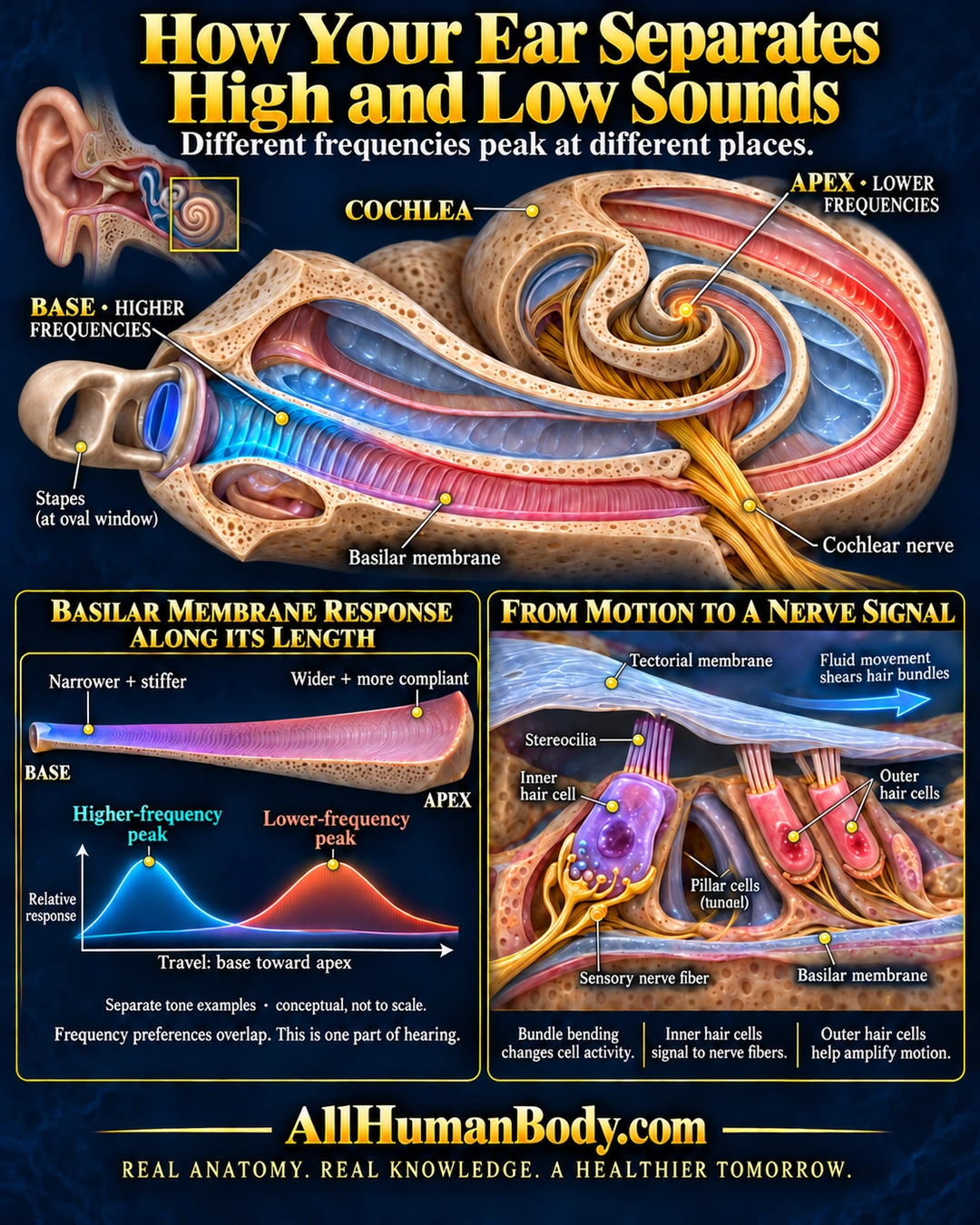 Special Senses
How Your Ear Separates High and Low Sounds
Different sound frequencies produce their strongest cochlear responses at different places. Higher-frequency peaks are nearer the base and lower-frequency peaks nearer the apex; overlapping preferences and hair-cell activity contribute to hearing.
Explore the explanation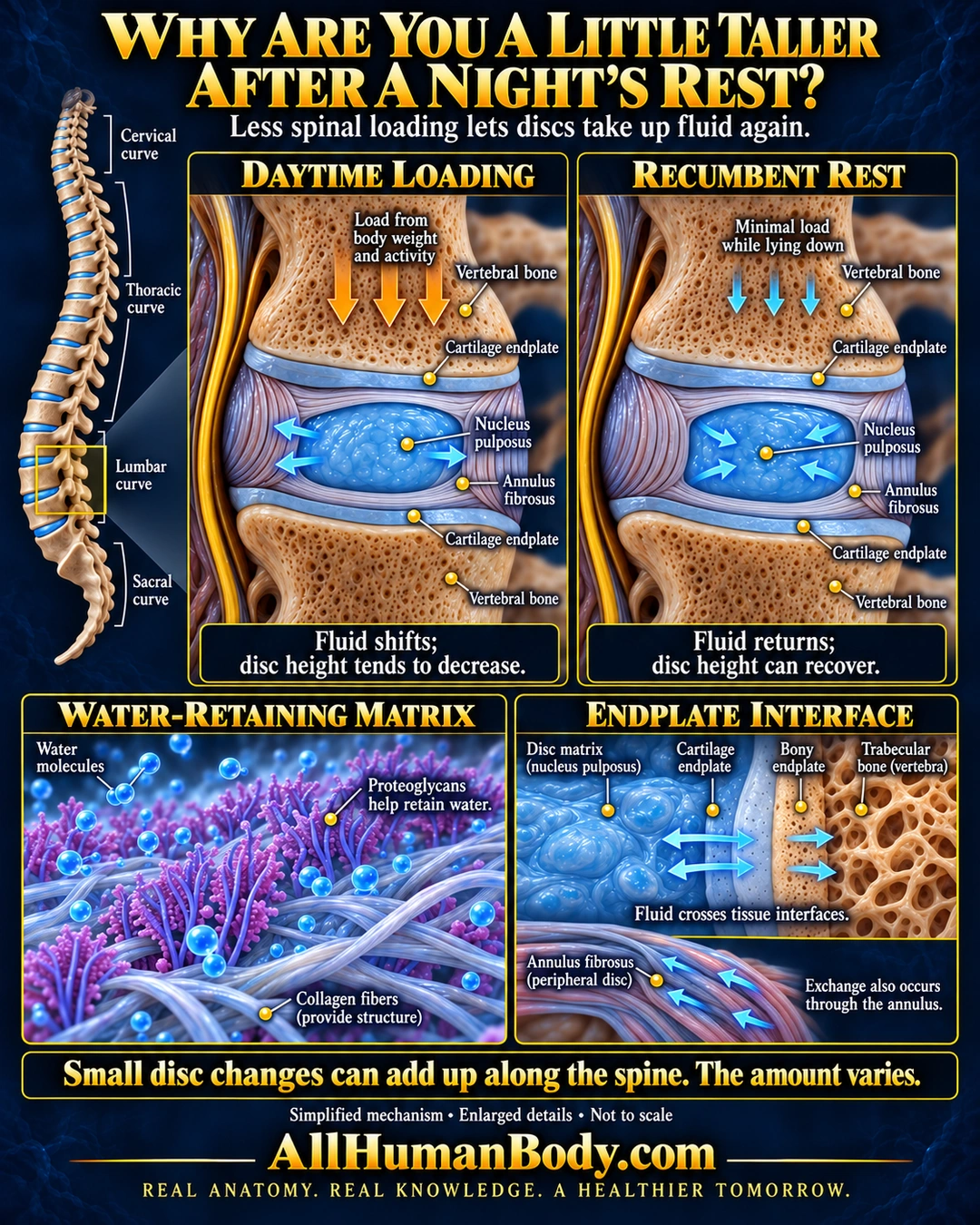 Musculoskeletal
Why Are You a Little Taller After a Night’s Rest?
Spinal loading changes disc fluid content and height. Reduced loading during recumbent rest allows fluid return, so small reversible changes across the spine can contribute to daily height differences; the amount varies.
Explore the explanation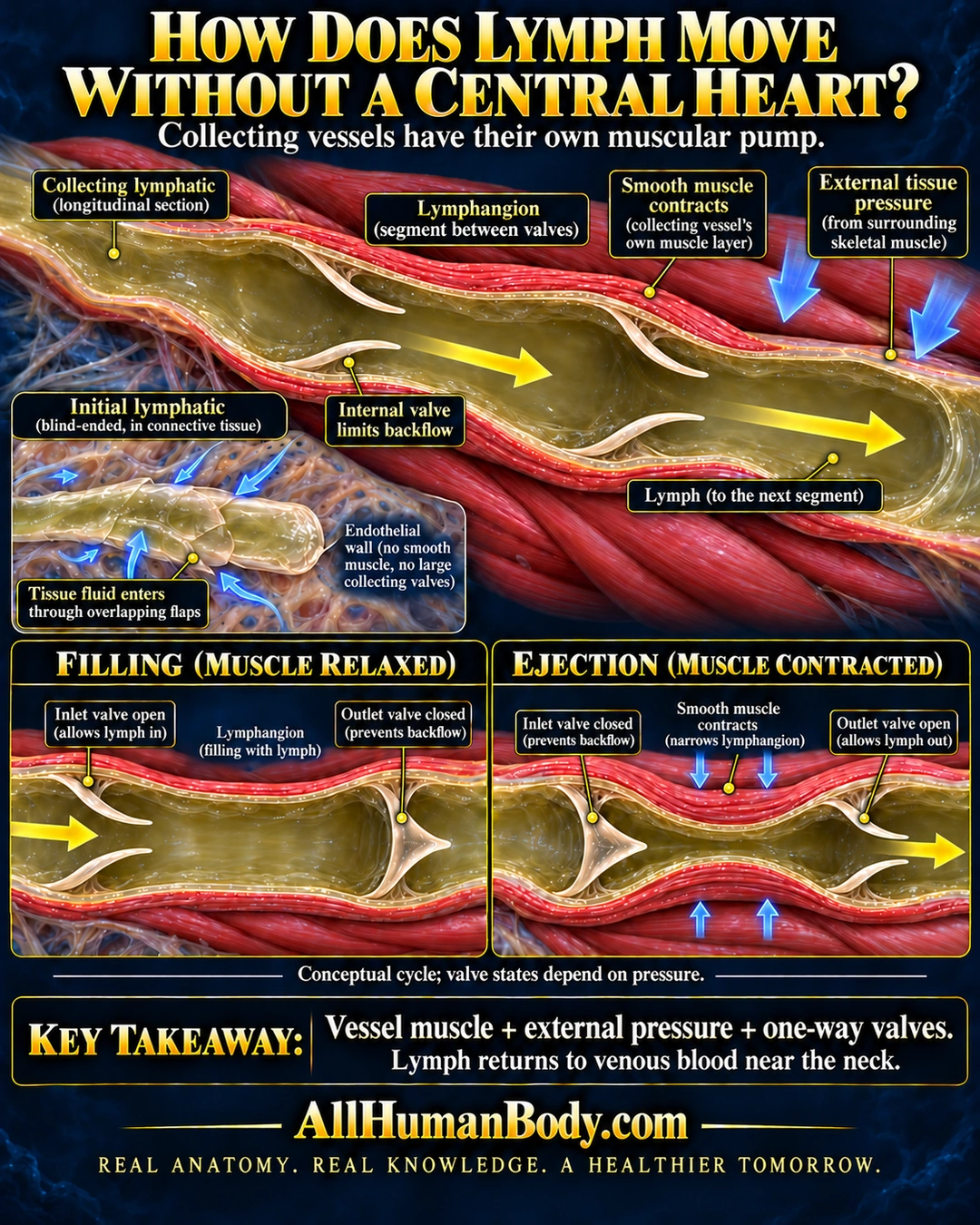 Lymphatic & Immune
How Does Lymph Move Without a Central Heart?
Collecting lymphatic vessels have muscular walls that can help propel lymph. Surrounding tissue pressure and pressure-operated valves also contribute, while thin-walled initial lymphatics collect fluid from tissues.
Explore the explanation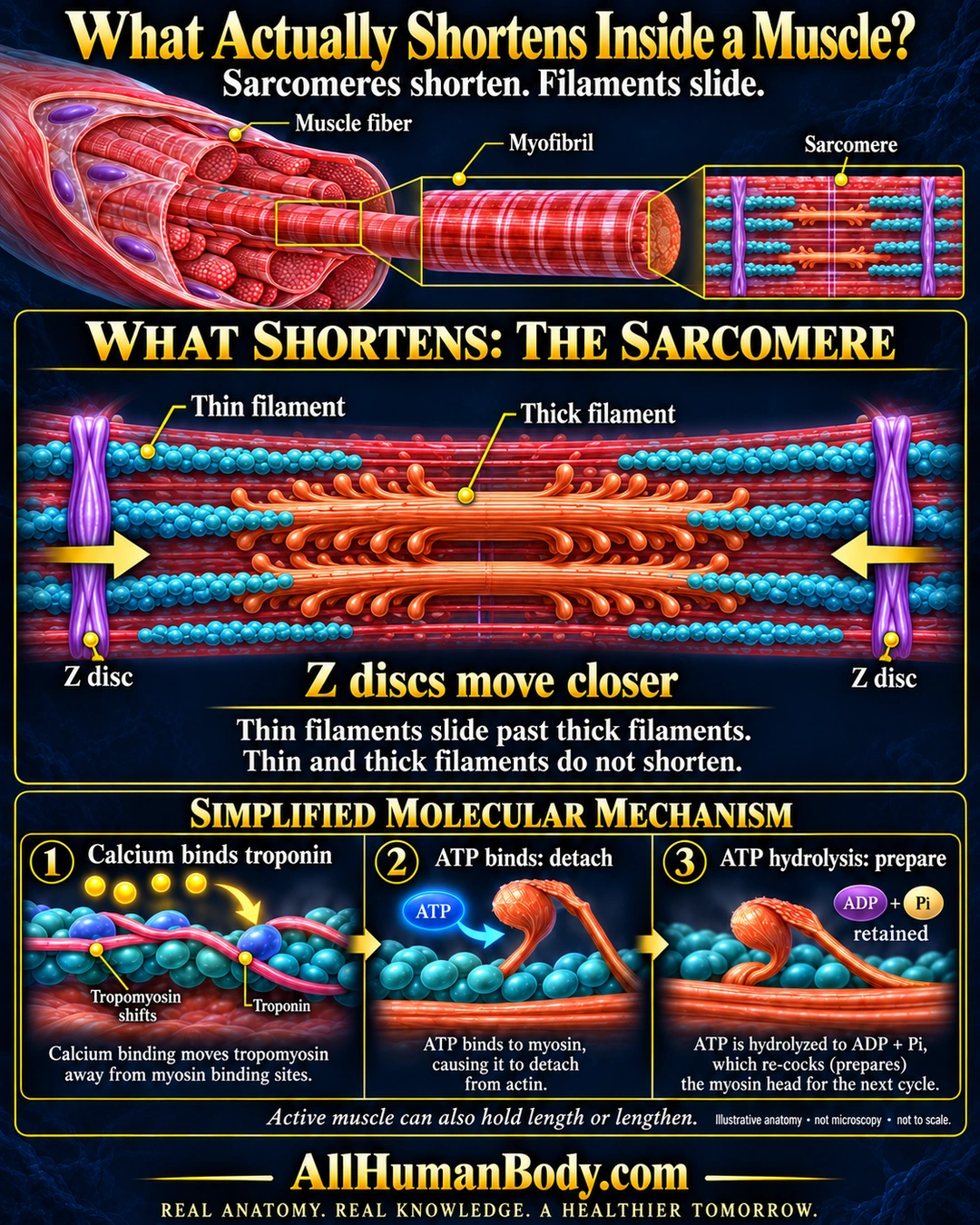 Musculoskeletal
What Actually Shortens Inside a Muscle?
During muscle shortening, sarcomere boundaries approach as thin and thick filaments slide into greater overlap. The filaments do not themselves shorten; calcium regulates access and ATP supports myosin cycling.
Explore the explanation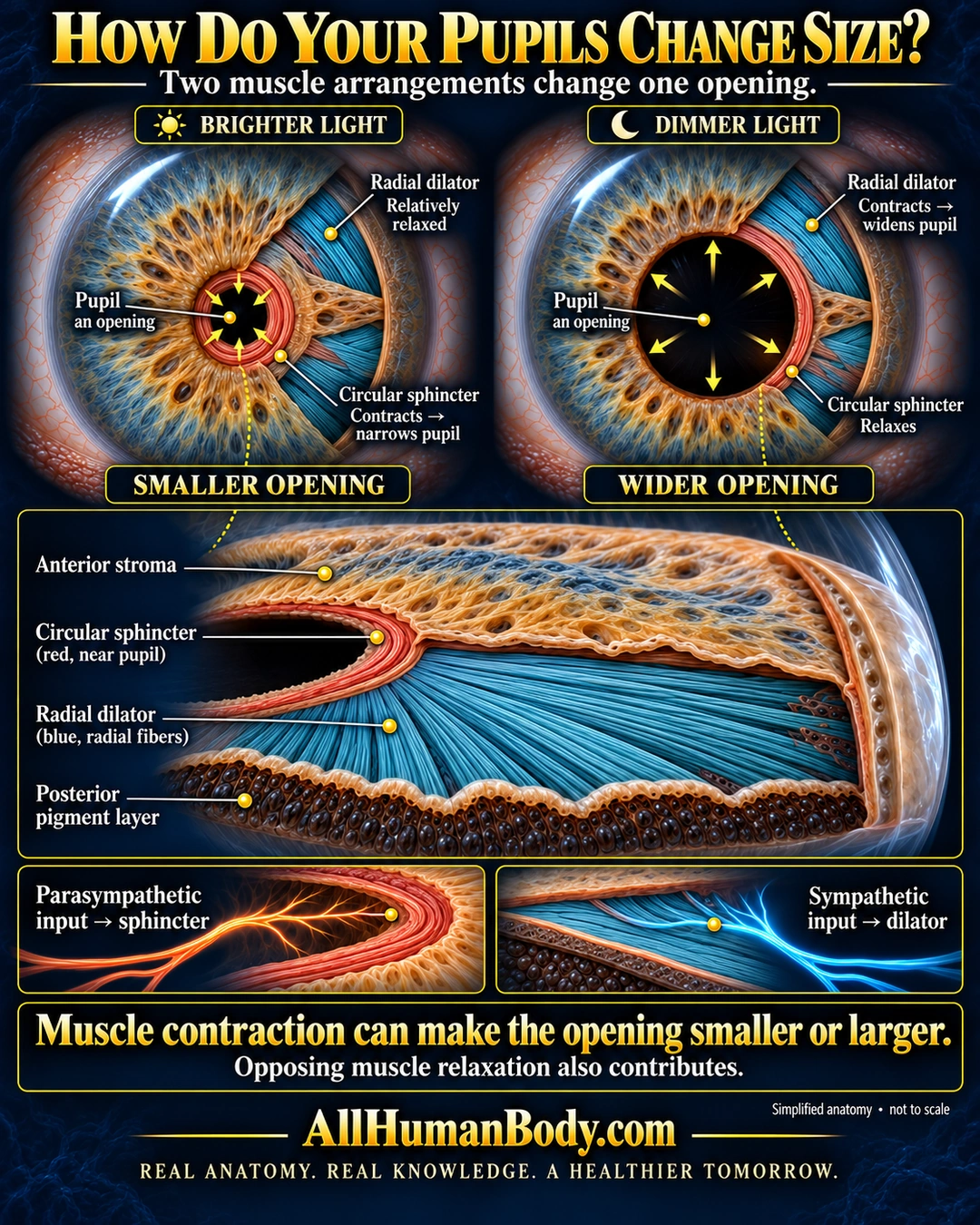 Special Senses
How Do Your Pupils Change Size?
A ring-shaped iris muscle can narrow the pupil, while radially arranged muscle can widen it. Parasympathetic and sympathetic inputs primarily control these respective muscles, and relaxation of the opposing muscle also contributes.
Explore the explanation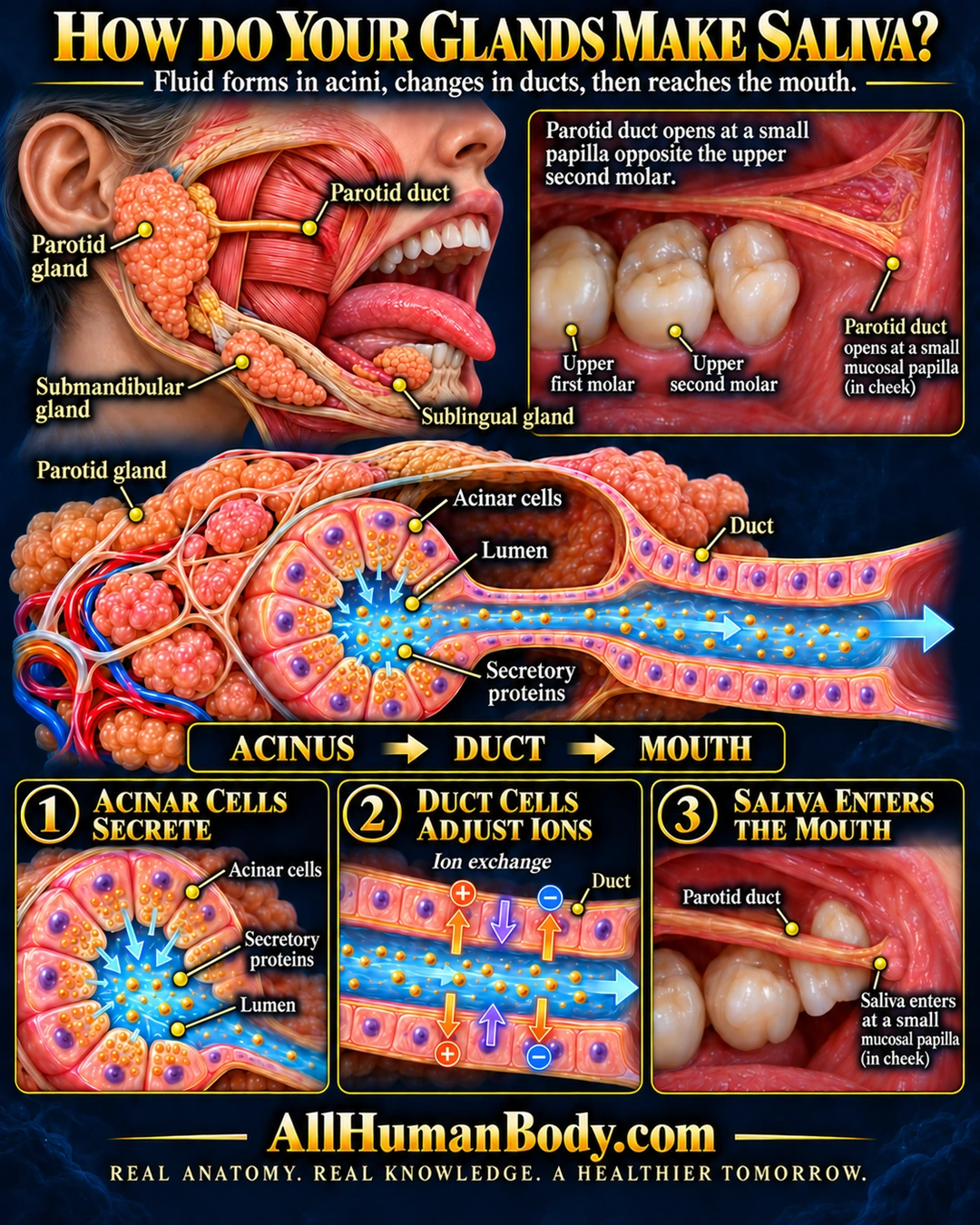 Digestive
How Do Your Glands Make Saliva?
Saliva begins in secretory units called acini. In this parotid example, cells add fluid and proteins to the lumen, ducts modify the mixture, and a duct opening delivers it into the mouth.
Explore the explanation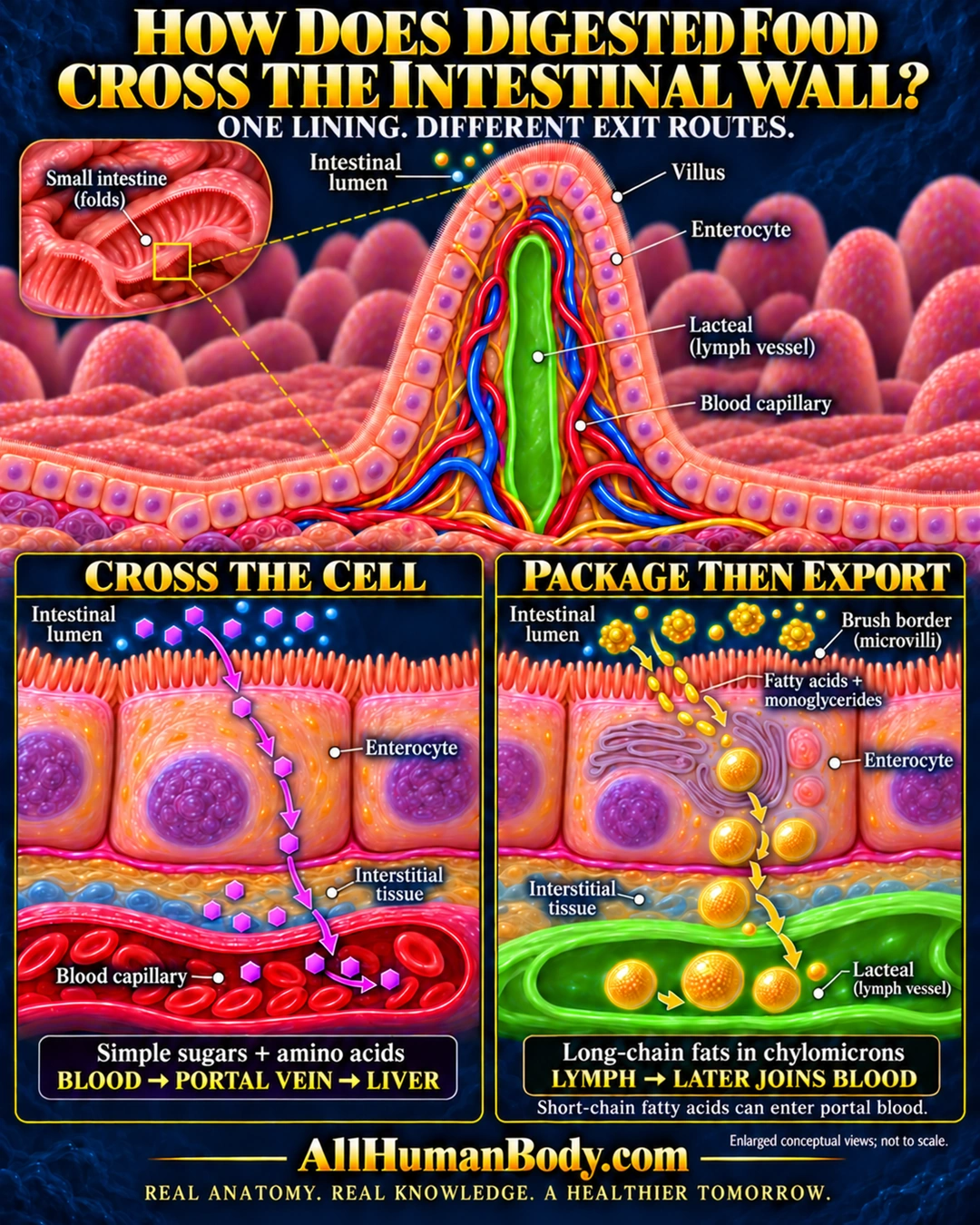 Digestive
How Does Digested Food Cross the Intestinal Wall?
Absorbed nutrients take different routes after crossing intestinal cells. Simple sugars and amino acids enter blood headed toward the liver, while many long-chain fats are packaged into chylomicrons and enter lymph first.
Explore the explanation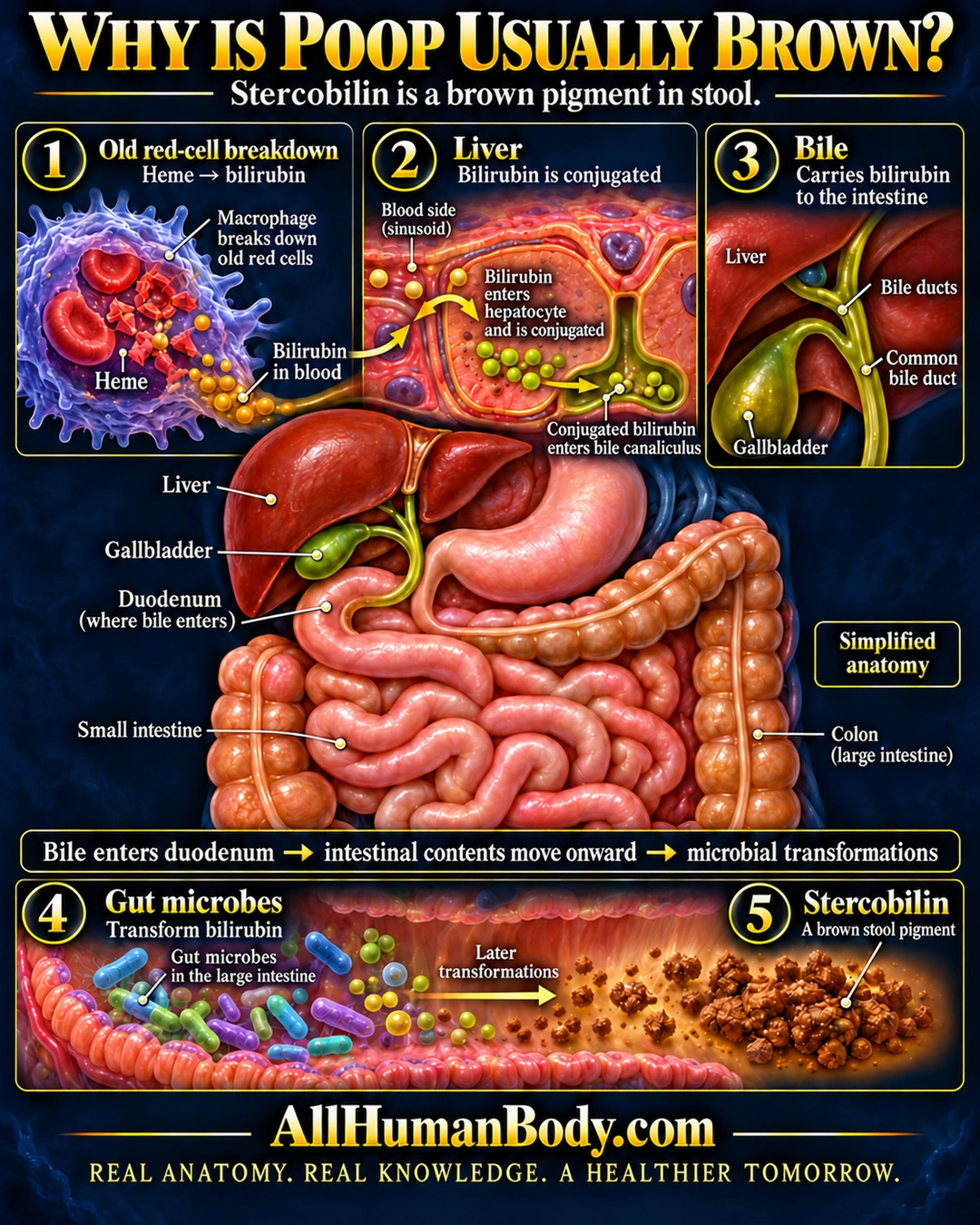 Digestive
Why Is Poop Usually Brown?
Breakdown of heme, much of it from old red blood cells, produces bilirubin. The liver processes it for bile delivery to the intestine, where microbial and later transformations lead to pigments including brown stercobilin.
Explore the explanation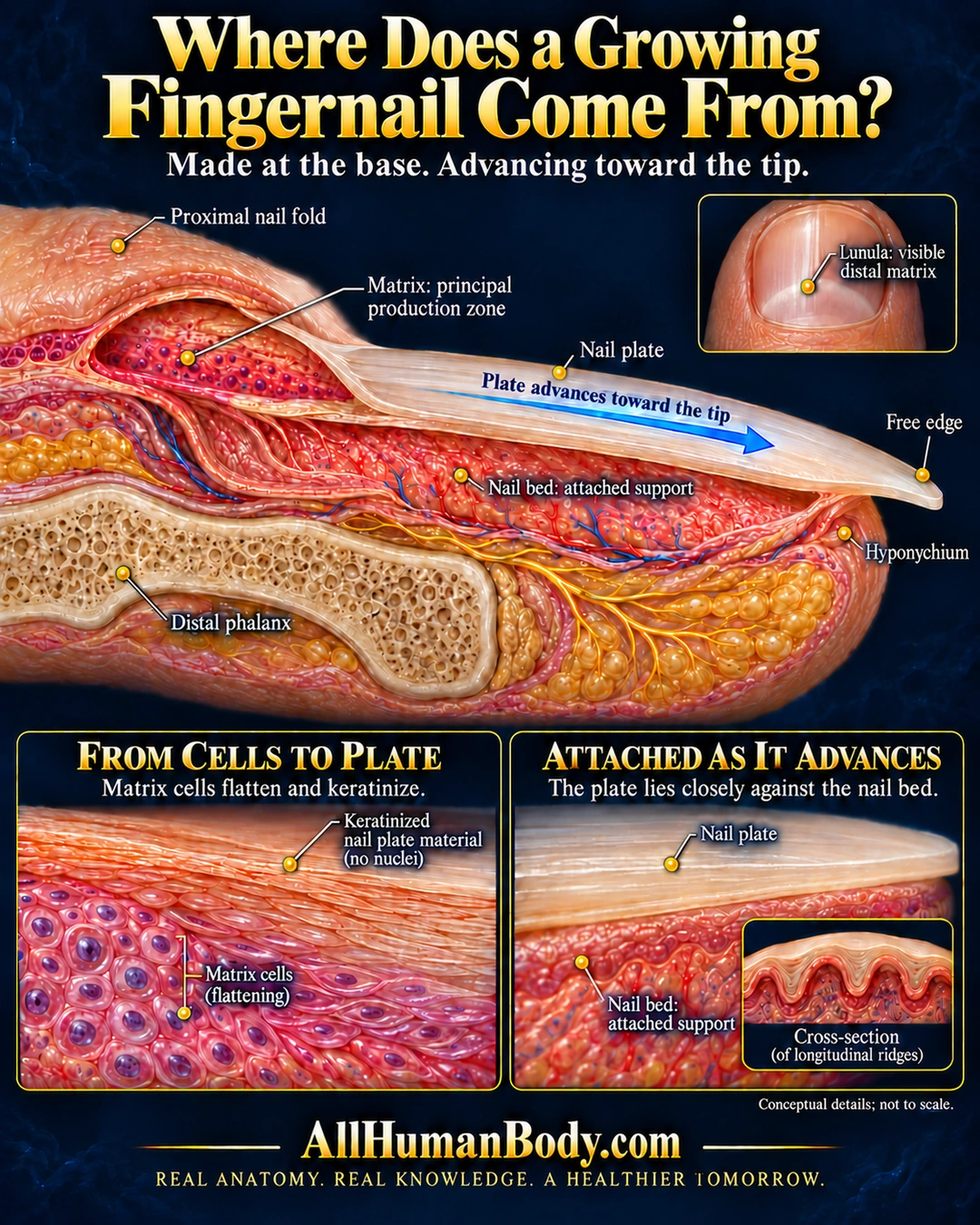 Integumentary
Where Does a Growing Fingernail Come From?
The matrix near the nail base is the principal source of the nail plate. Its cells become compact keratinized material, and the plate advances toward the fingertip while closely supported by the nail bed.
Explore the explanation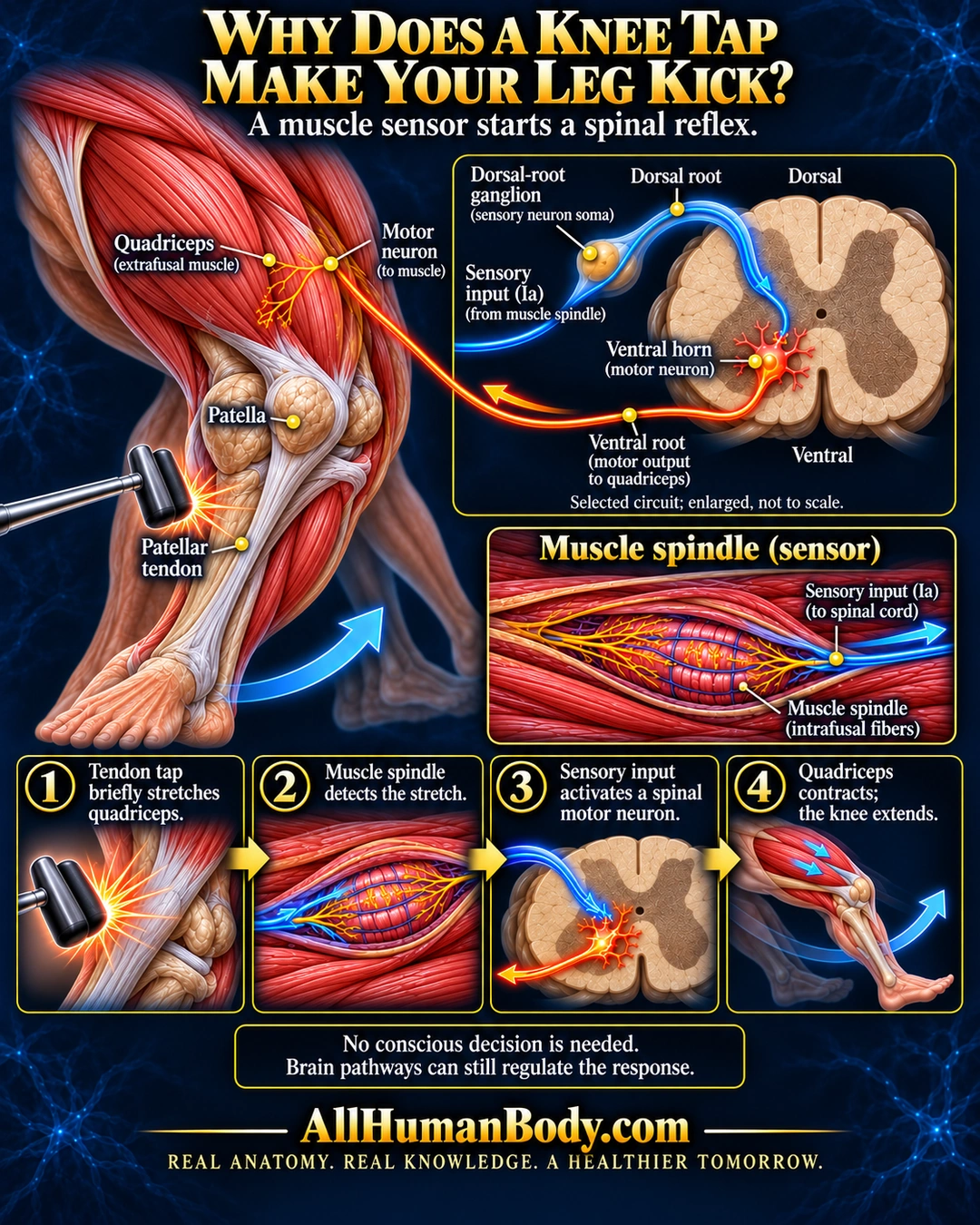 Nervous
Why Does a Knee Tap Make Your Leg Kick?
A brief stretch of quadriceps activates muscle spindles. Their sensory input can excite a spinal motor pathway that contracts quadriceps and extends the knee without a conscious decision, while brain pathways can still regulate the response.
Explore the explanation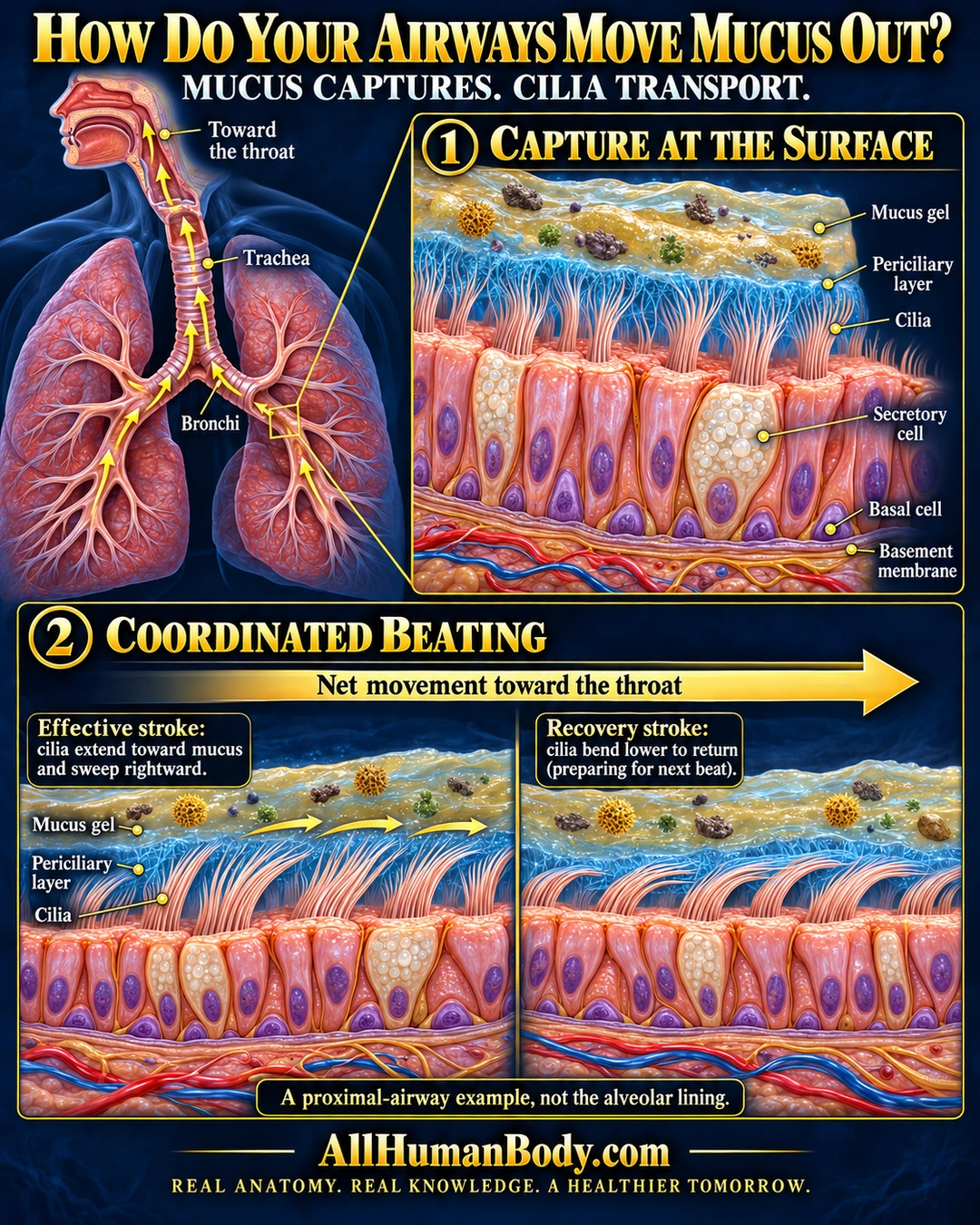 Respiratory
How Do Your Airways Move Mucus Out?
Airway mucus catches some inhaled material. Coordinated ciliary beating helps move it toward the throat, where it can be swallowed or expelled; this lining is different from the gas-exchange surface of alveoli.
Explore the explanation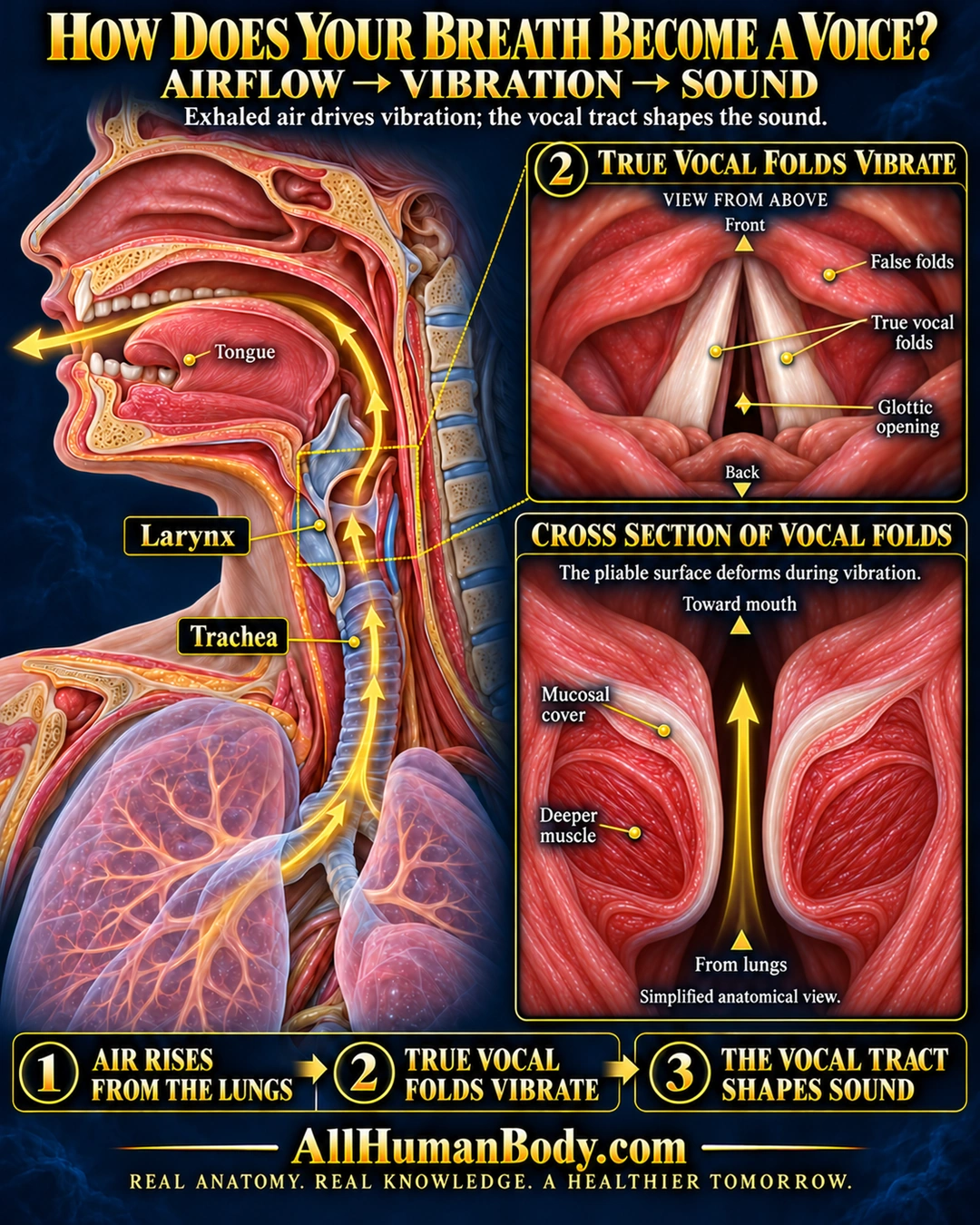 Respiratory
How Does Your Breath Become a Voice?
Ordinary voiced sound uses exhaled air to drive vibration of the true vocal folds. The throat and mouth then shape the sound; the illustration locates these structures rather than showing a complete vibration cycle.
Explore the explanation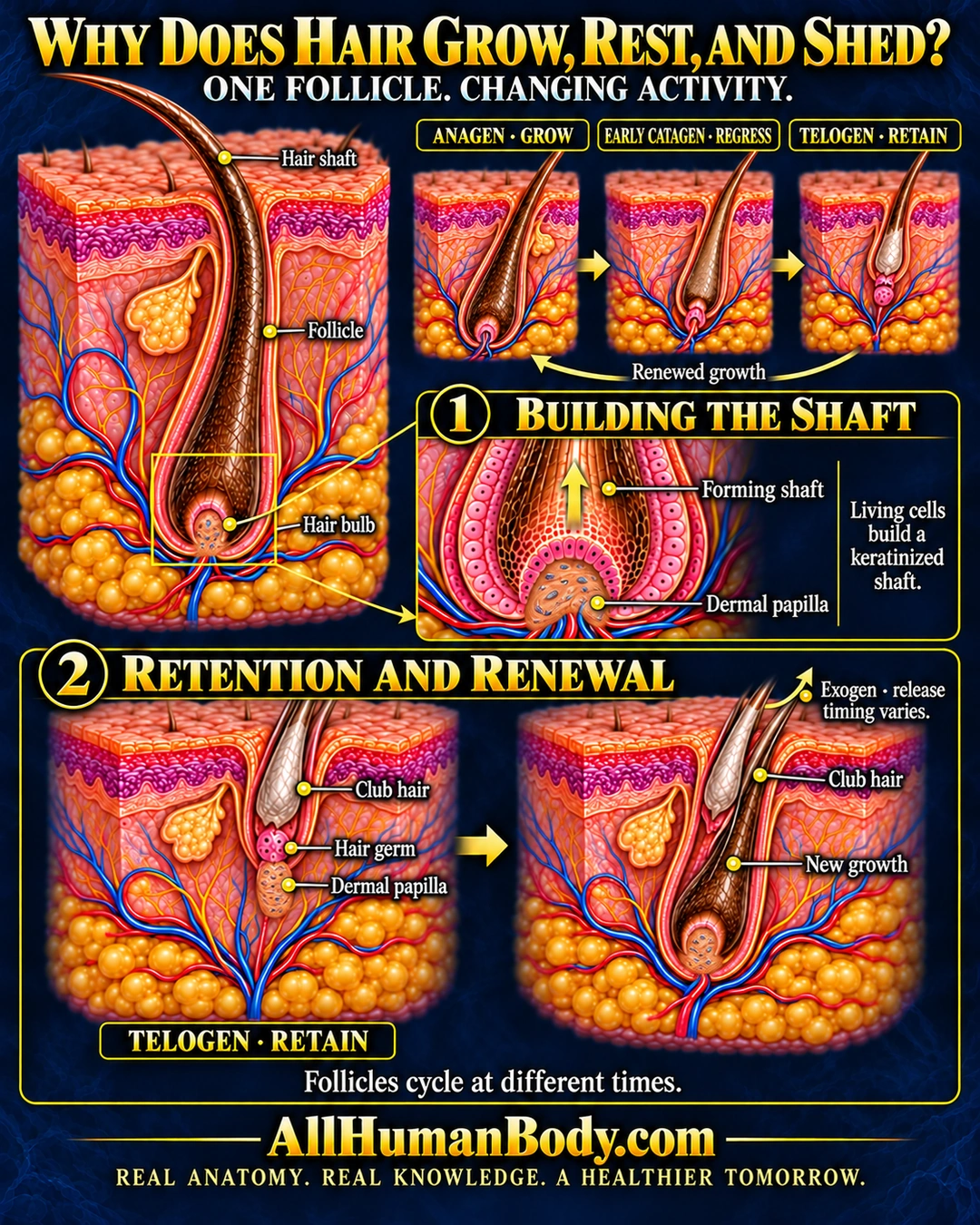 Integumentary
Why Does Hair Grow, Rest, and Shed?
A hair follicle changes activity while remaining a living unit. It produces a shaft during growth, remodels its lower part during regression, can retain a club hair during rest, and later renew growth; shedding timing varies.
Explore the explanation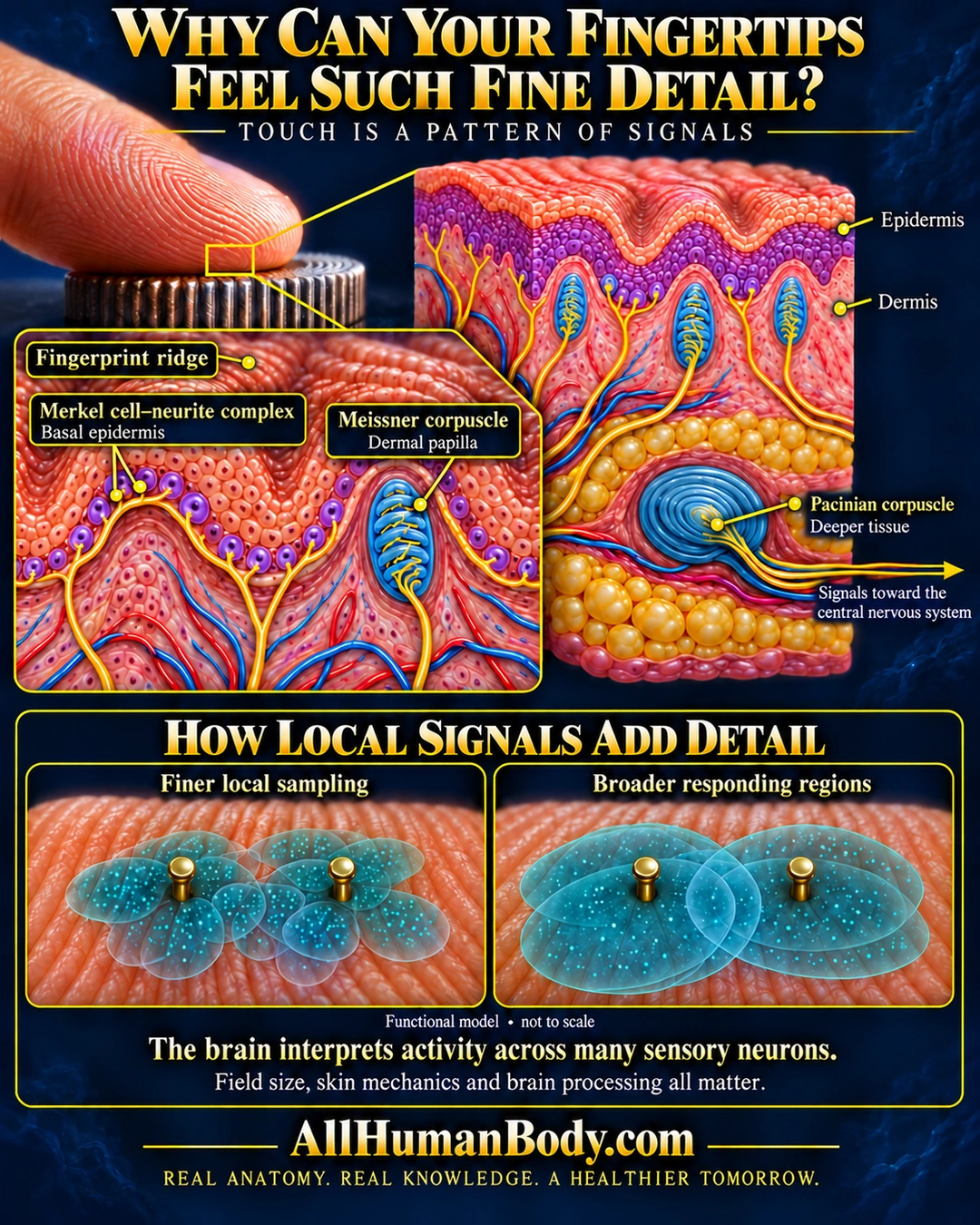 Nervous
Why Can Your Fingertips Feel Such Fine Detail?
Fingertip detail is represented by patterns of sensory activity. Small, overlapping responding regions can help distinguish nearby features, while skin mechanics and brain processing also shape what is felt.
Explore the explanation