Digestive / VISUAL EXPLAINER
How a Hiatal Hernia Pushes the Stomach Through the Diaphragm
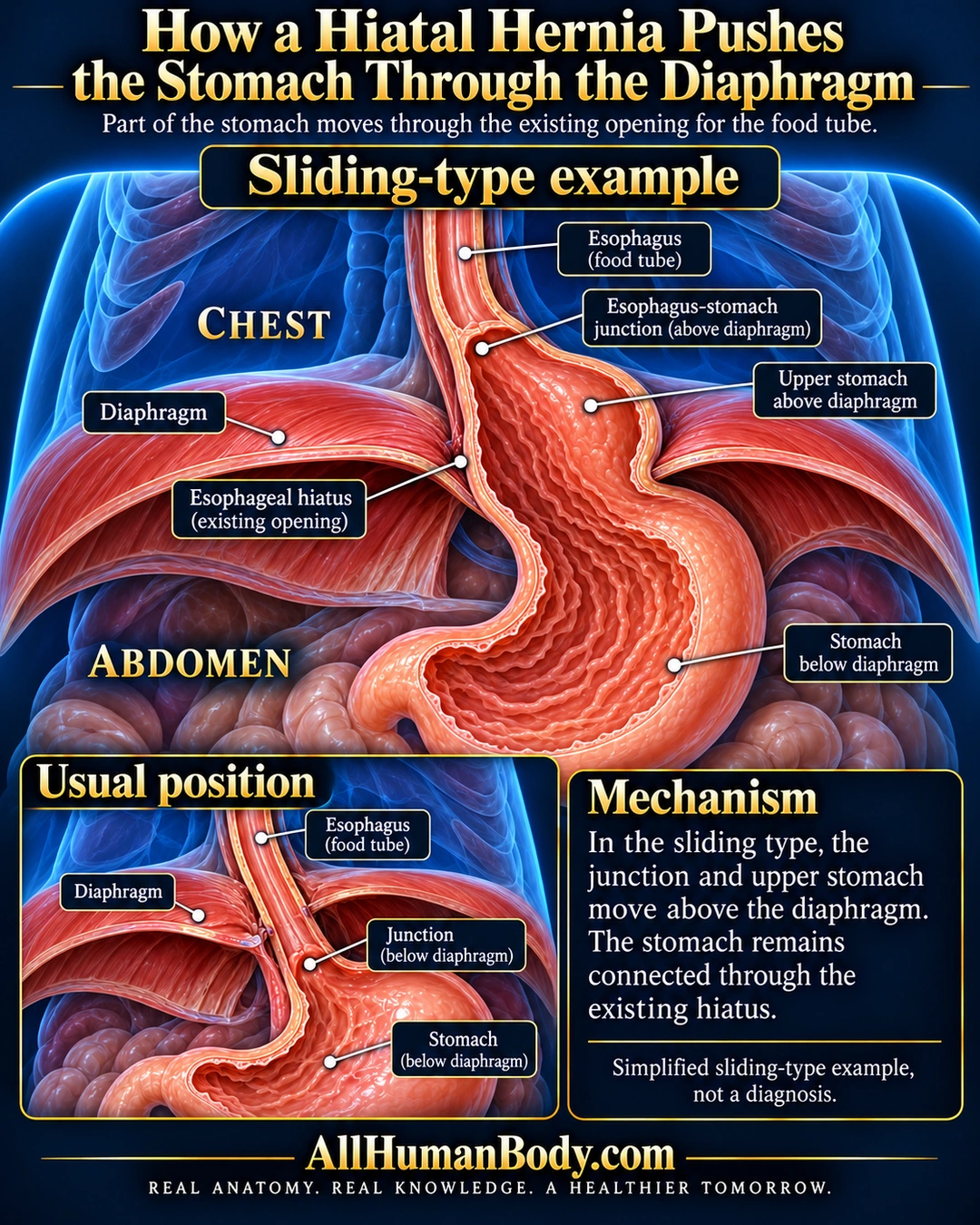
A hiatal hernia involves part of the stomach passing through the diaphragm’s existing esophageal opening. In the sliding type shown, the junction and upper stomach move above the diaphragm.
READ THE IMAGE
What the illustration shows
Gold headline reads How a Hiatal Hernia Pushes the Stomach Through the Diaphragm. Main sliding-type teaching cutaway shows the esophagus joining the upper stomach above the domed diaphragm. The stomach walls and open lumen remain continuous through the existing esophageal hiatus to the lower stomach in the abdomen; diaphragm cutaway rims stop at the outer walls instead of crossing the lumen. Chest and abdomen are labelled, with leaders identifying esophagus, junction above diaphragm, upper stomach, diaphragm, existing hiatus and stomach below. Lower-left usual-position inset shows the junction and stomach below diaphragm. Mechanism text describes displacement of junction and upper stomach through the existing opening, with a non-diagnostic scope statement. Navy/cyan context, bright coral tissue, gold AllHumanBody.com and exact slogan.
How to interpret this poster
- Sliding example not all hernias, new tear or whole-stomach displacement. No symptom diagnosis, severity or treatment.
- AI-assisted educational illustration; not physician certification, a diagnosis or individualized medical advice.
- Fine annotations require enlargement; preserve the full uncropped illustration and its qualifiers.
AI-assisted educational illustration, adapted into web-sized images without changing its composition. This is general education, not an individual diagnosis or treatment recommendation.
EVIDENCE / CONTEXT
Sources and what they support
- Mayo Clinic: Hiatal hernia ↗
Stomach through preexisting hiatus into chest.
- Cleveland Clinic: Hiatal hernia ↗
Sliding versus paraesophageal configurations and junction displacement.