Digestive / VISUAL EXPLAINER
How Can Plaque Make Your Gums Bleed?
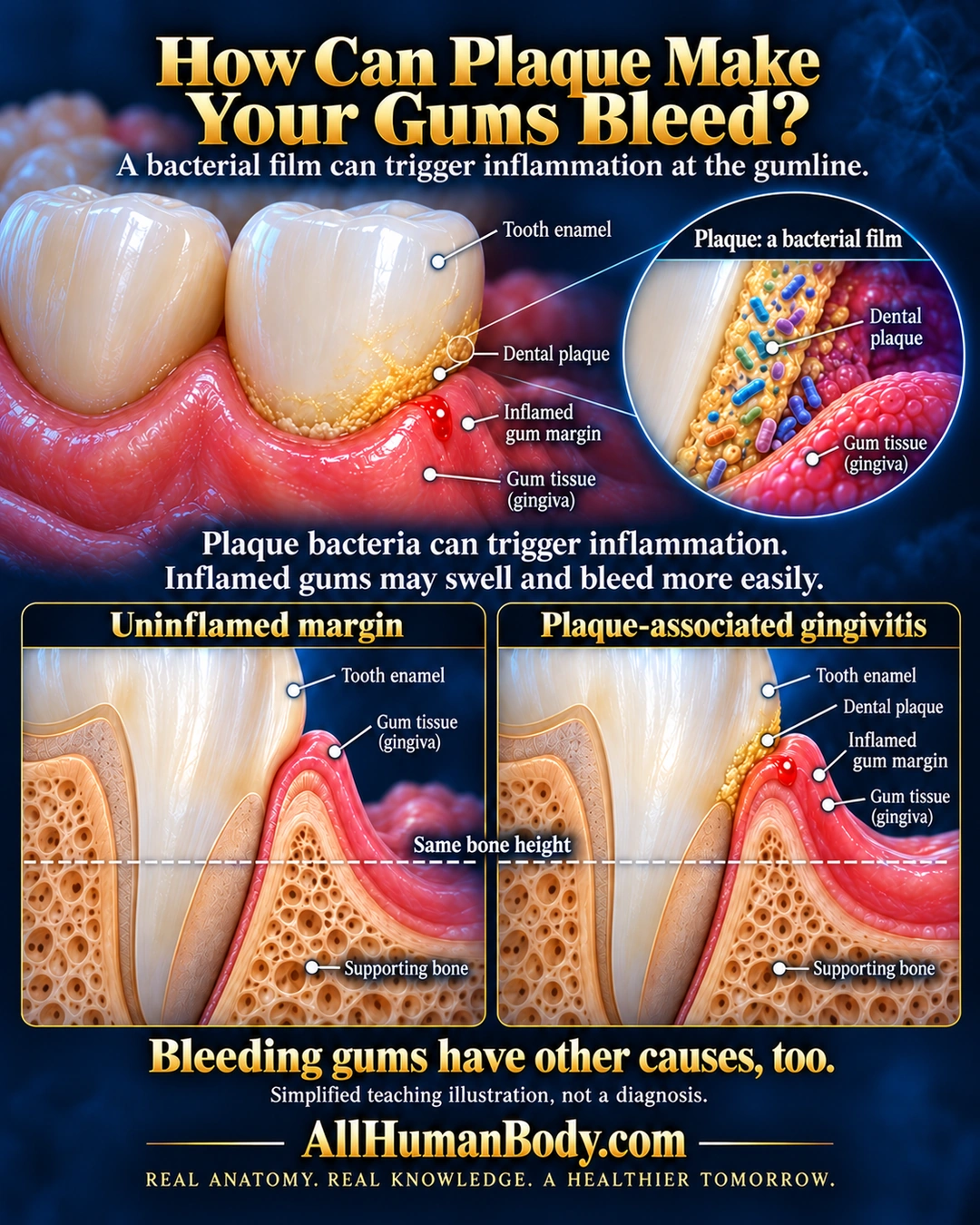
Plaque bacteria near the gumline can trigger inflammation. Inflamed gums may swell and bleed more easily. This gingivitis example preserves supporting bone; bleeding has other possible causes too.
READ THE IMAGE
What the illustration shows
Navy-and-gold educational poster titled “How Can Plaque Make Your Gums Bleed?” Two intact ivory teeth rise from coral gum tissue. A yellow film beside the gumline is labelled dental plaque; a small red bead rests on the swollen margin. White dots identify enamel, plaque and gum tissue. A circular enlargement shows symbolic coloured bacteria in plaque on the tooth beside the gum. Text says plaque bacteria can trigger inflammation and inflamed gums may swell and bleed more easily. Two lower matched tooth-and-gum sections contrast an uninflamed margin with plaque-associated gingivitis, retaining similar supporting bone height; a dashed horizontal reference reads “Same bone height.” The inflamed-margin leaders end on gum beside, not on, the red beads. The takeaway says “Bleeding gums have other causes, too.” A non-diagnostic disclaimer, gold AllHumanBody.com and the full brand slogan appear on a plain navy footer.
How to interpret this poster
- No inevitability of progression, hygiene blame or brushing/flossing challenge. Bone height comparison is schematic, not patient evidence.
- AI-assisted educational illustration; not physician certification, a diagnosis or individualized medical advice.
- Fine annotations require enlargement; preserve the full uncropped illustration and its qualifiers.
AI-assisted educational illustration, adapted into web-sized images without changing its composition. This is general education, not an individual diagnosis or treatment recommendation.
EVIDENCE / CONTEXT
Sources and what they support
- NIDCR: Gum disease ↗
Plaque-related inflammation, swelling and easy bleeding.
- MedlinePlus: Gingivitis ↗
Gum inflammation distinguished from advanced attachment/bone loss.
- MedlinePlus: Bleeding gums ↗
Multiple causes of bleeding, not symptom-only diagnosis.